Homes, Caps and Skilled Visas: A Friendly Guide to Australia's Latest Migration Debate
News · 2026-08-25 · 4 min read
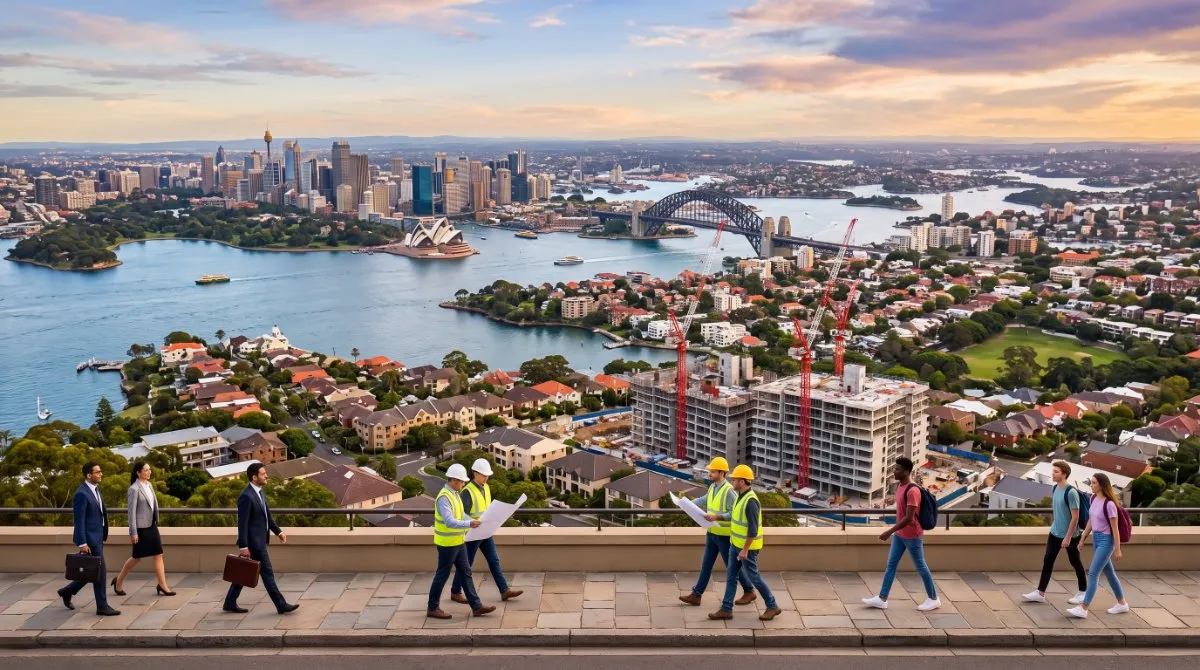
If Australia is on your list of dream destinations, you may have heard that migration is once again a hot topic there. This time the discussion is about linking the number of people who arrive each year with the number of new homes being built. Whether you are a worker hoping to move with your family or an employer who depends on staff from overseas, it helps to understand what is being proposed and what has not yet been decided.
The idea on the table: one arrival per new home
The Coalition has suggested limiting net overseas migration to one new arrival for every new home that gets built. Opposition Leader Angus Taylor says the aim is to keep population growth in step with the country's housing capacity. Under this approach, the intake would be well over 70 percent below the record migration levels of 2022–23. One important point: the Coalition has not yet said which visa categories would be reduced. Those details would only be decided if it forms government.
How far numbers have already come down
It helps to look at recent figures. According to the ABS, net overseas migration reached its highest point of 538,000 in the 2022–23 financial year. The next year it went down to 429,000, and in the year to June 2025 it fell again to 306,000. So numbers are already falling. What people are debating now is how much lower they should go, and how fast.
Employers ask for skilled workers to be protected
Interestingly, business groups are not saying no to tighter migration. What they are asking is for skilled migration to be treated differently. Innes Willox, who leads the Australian Industry Group, has basically said that current skilled migration settings are close to where they should be. In his view, the focus should be on speed and accuracy, bringing in the right skills when employers truly need them, instead of cutting numbers across the board.
The Australian Chamber of Commerce and Industry shares a similar but wider view. Its acting chief executive, David Alexander, has said migration policy must be carefully balanced, weighing public trust and social cohesion against the real economic benefits that a well-managed program brings. He also warned that what employers need must stay part of the discussion.
Who will build the houses?
The property sector has raised a point that deserves more attention. The Property Council of Australia notes that over the past two decades, only a small share of skilled migrants have come with construction-related trade skills, even though construction is one of the industries under the greatest pressure. In other words, a plan that limits migration to protect housing supply may miss a basic problem: there are not enough migrant tradespeople to build those homes to begin with.
This creates a real puzzle. If arrivals are meant to follow the number of homes completed, Australia may need to attract more migrants with construction and trade skills, not fewer. Otherwise, the housing target becomes harder to reach. For tradespeople, including many who have built their experience on projects in the Middle East or back home in the Philippines, this part of the debate is worth following.
What this means if you are planning to apply
For skilled workers, there is a helpful lesson here. Skilled pathways seem to be the part of the system that both major parties and industry groups are least willing to cut. Even as overall numbers drop, employer-sponsored and skills-based visa streams are being treated as the part worth keeping, because Australian businesses say they cannot fill certain gaps with local workers.
Still, being protected is not the same as being untouched. A future government that reshapes visa categories could still make eligibility rules stricter, change processing timelines or adjust occupation lists, even if it keeps the skilled stream in general. So it is wise to keep your documents ready and up to date rather than leaving everything to the last minute.
Staying calm and prepared
There is real uncertainty in Australian migration policy right now. Even so, the government, the opposition and industry all appear to agree that skilled migration will stay at the centre of the system, even as total numbers come down. For workers and sponsoring employers alike, the best approach is to follow changes to visa categories as they are officially announced, and to see skilled and trade pathways as the most reliable way into Australia, no matter which party sets the limits. Keep learning, keep your papers ready, and trust only official sources.
#australia skilled migration #net overseas migration australia #coalition migration policy #australia visa changes 2026 #skilled migration visa australia #employer sponsored visa australia #australia housing and migration #migration cap australia #trade skilled migrants australia #australia migration intake #construction skills shortage australia #australia work visa pathways #skilled worker visa australia #australia immigration policy update #migration program reform australia
 Australia Still Needs Workers: What the Migration Headlines Leave Out for Job Seekers Abroad
 Why Australia's Own Projections Point to a Continuing Need for Migrant Workers
 AI Is Changing Office Jobs: How to Choose a Safer Path to Work in Australia