Australia Still Needs Workers: What the Migration Headlines Leave Out for Job Seekers Abroad
News · 2026-09-11 · 5 min read

If you have been following news from Australia, you may have seen a lot of noise about “net overseas migration” and calls to bring the numbers down. Politicians in Canberra argue about it almost every day. But step away from Parliament and onto a building site, a farm, an aged care home or a busy restaurant, and you will hear a very different worry: there simply are not enough people to fill the jobs.
For anyone dreaming of working in Australia, whether you are currently employed in the Middle East or still back home in the Philippines, that difference between political talk and the real labour market is worth understanding. It also matters to employers thinking of sponsoring staff and to advisers who guide applicants. The short version: the situation is less discouraging for migrants than the headlines make it sound.
The Real Shortage: Homes and the Tradies Who Build Them
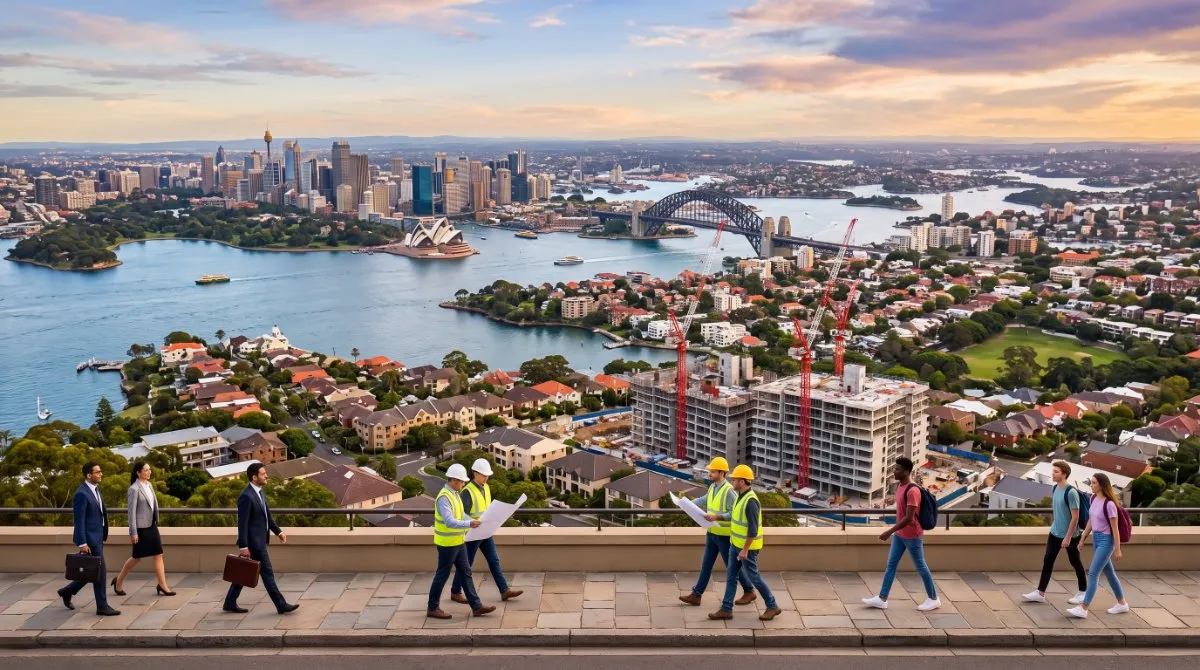
The South Australian premier, Peter Malinauskas, has put it plainly. In his view, the country is not dealing with too many migrants. It is dealing with too few houses, plus too few tradespeople to construct them. Electricians, carpenters and workers in other building trades are hard to find in almost every state. Each skilled worker who does not come to fill one of those jobs means more waiting for the homes Australia needs.
If you work in construction or a related trade, this is encouraging. It suggests that trades and construction-linked occupations have a good chance of remaining a priority for state and employer sponsorship, even while some other visa types are being tightened.
Which Visas Are Feeling the Squeeze
Not every visa pathway is being handled the same way. The federal government has already started to slow down processing of working holiday maker visas. Many farms, hotels, restaurants and tourism businesses depend on these visa holders for seasonal and entry-level work. Industry groups such as the National Farmers Federation have objected strongly, saying the decisions were made with little consultation and without considering how important these workers are to food production and to regional economies.
What does that mean for you? Sweeping caps may win votes, but they are a rough tool for the economy. Based on what has happened so far, the pattern looks like extra hurdles in particular visa subclasses, especially working holiday and lower-skilled temporary streams, rather than a complete closing of the door to migration.
State Leaders Are Speaking Up for Migrant Workers
This time, the criticism is not coming from farmers and chambers of commerce alone. Labor's own state premiers are openly disagreeing with their federal colleagues. Victoria's Ben Carroll has described migration as essential to the state's prosperity, naming healthcare, labour and farm workers in particular. He has also warned about the risk to international education, which is Victoria's largest services export. Western Australia's Roger Cook has made similar points.
Why should this matter to you? State governments manage their own nomination programs for skilled and employer-sponsored visas. When state leaders speak this strongly about needing migrant workers, it is a fair sign that their nomination streams will keep pushing for bigger, not smaller, allocations, even if federal settings become stricter in other areas.
Looking Past the Big Headline Figure
Net overseas migration was close to 301,000 in 2025, higher than the pre-pandemic norm of roughly 210,000 a year. That figure is what opposition politicians point to when they call for caps as low as 170,000. Business groups, including the Australian Chamber of Commerce and Industry, say that focusing on one big number misses the point. What really shapes the economic impact is the composition: the mix of students, temporary workers, skilled migrants and family visas that together make up the total.
In practical terms, changes are far more likely to come through eligibility rules, processing times and limits on specific categories than through one dramatic cut across the board.
Your Planning Checklist
- Trades and construction jobs: still a strong option, because the housing-related shortage is widely recognised.
- Working holiday and seasonal work: the most exposed to processing delays in the near term. Apply early and allow for longer waiting times.
- State-nominated skilled visas: could hold up better than federal general skilled migration streams, since premiers are actively defending their labour needs.
- Healthcare and aged care: state leaders keep naming these as sectors that cannot afford more labour constraints. If you have care experience, whether gained at home or overseas, these fields are worth following closely.
The arguments in Canberra will keep producing headlines about “mass migration.” Underneath, though, the economic picture is steady: long-running trade shortages, a housing crisis that migrants are needed to help fix, and state governments lobbying for more workers. For many people hoping to make the move, that is a more hopeful story.
Takeaway for every kabayan: Do not let scary headlines stop you from preparing. Build your skills in the areas Australia keeps saying it needs, get your documents ready early, and check the current rules for your chosen visa from official sources before you apply.
#australia skilled migration #australia visa changes 2026 #working holiday visa australia #australia housing crisis migration #skilled worker shortage australia #australia net overseas migration #employer sponsored visa australia #state nomination visa australia #australia immigration policy update #trades shortage australia #farm worker visa australia #australia migration crackdown #temporary visa holders australia #australia construction labour shortage #australia migration news 2026
 Homes, Caps and Skilled Visas: A Friendly Guide to Australia's Latest Migration Debate
 Is Australia Closing Its Doors? A Calm, Clear Look at the Migration Debate for Skilled Workers
 Australia Is Short 83,000 Builders: A Friendly Guide for Tradespeople Thinking of Making the Move