Harvest Time in Australia: A New Fast-Track for Urgent Farm Worker Visas
News · 2026-09-26 · 3 min read
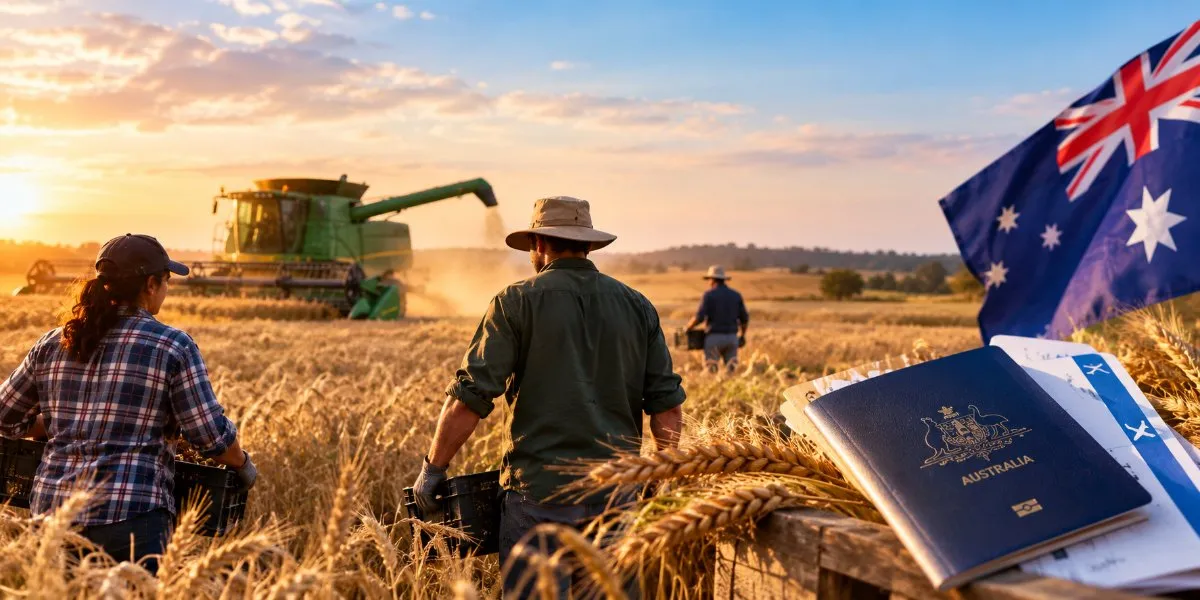
Harvest is just weeks away across Australia's wheat, barley and canola growing regions, and farmers have had more to worry about than the weather. A federal plan to reduce immigration numbers raised real doubts about whether enough temporary farm workers would arrive in time. Now a new fast-track visa arrangement has been announced, and it gives growers at least some breathing room.
Why Farms Were Getting Nervous
Australia is one of the world's leading suppliers of wheat, barley and canola, and that success relies on extra hands every harvest. Many of these seasonal workers are temporary migrants, often travelling on working holiday maker visas. So when Canberra announced plans to cut the yearly migration intake by tens of thousands, farm employers saw the problem straight away: fewer visas processed just when the paddocks need people most. This is what happens when a labour squeeze meets a fixed harvest calendar.
Sources in the industry say processing times for working holiday visa applications had already grown from a few days to several months. For farms that work within short seasonal windows, a wait like that is very hard to manage.
The New Arrangement, Step by Step
- This week, Grain Producers Australia announced that the government has agreed to a workaround.
- Industry bodies can nominate urgent farm labour cases for faster review. This is a referral pathway, not a blanket exemption.
- Agricultural groups point out where the need is critical, and the Department of Home Affairs then gives priority to those particular applications.
- According to government sources, the arrangement will be run through the National Farmers Federation and will focus on applicants who already hold a documented agricultural job offer and a start date within a three-month window.
Hopeful, but Still Waiting to See
GPA Chair Matthew Madden welcomed the move in a careful way. He thanked the government for listening, but was honest that many questions are still open: how the system will actually work, how many applications it can handle, and whether "priority" will really mean quicker approvals or just a different line to wait in.
That careful tone makes sense. The main visa settings have not changed, and a three-month processing ceiling and stricter limits on visa extensions are still in place. What has been added is more like a triage lane than a change of policy.
What Growers Can Take From This
For farm owners counting the days to harvest, there is now a real, though untested, option: an official way to raise labour shortages before they turn into lost crops. Whether it brings workers to the paddocks on time, or only adds another step to a system that is already stretched, will only be known once harvest begins and the first batch of "urgent" applications is processed.
A Friendly Reminder for Farm Work Hopefuls
If you are hoping to join a harvest team, keep your paperwork tidy and make sure any job offer you receive is clearly documented, with a confirmed start date. Being organised helps you move quickly when an opportunity comes up. Ingat and good luck!
#australia farm visa #temporary migrant farm workers #working holiday visa australia #australian harvest labour shortage #grain producers australia #australia immigration crackdown #priority visa processing australia #australian wheat barley canola export #national farmers federation visa #department of home affairs farm visa #agricultural labour shortage australia #farm worker visa processing time #australia migration policy 2026 #seasonal farm labour visa #australian grain harvest workers
 Bringing the Family Along: What Is Really Behind Australia's 485 Visa Growth
 Working Holiday in Australia? How the New WHM Ballot Could Change Your Plans
 Australia Still Needs Workers: What the Migration Headlines Leave Out for Job Seekers Abroad