Workers Ready, Visas Waiting: How Australia's Processing Priorities Are Hitting WA Meat and Pork Jobs
News · 2026-09-07 · 4 min read
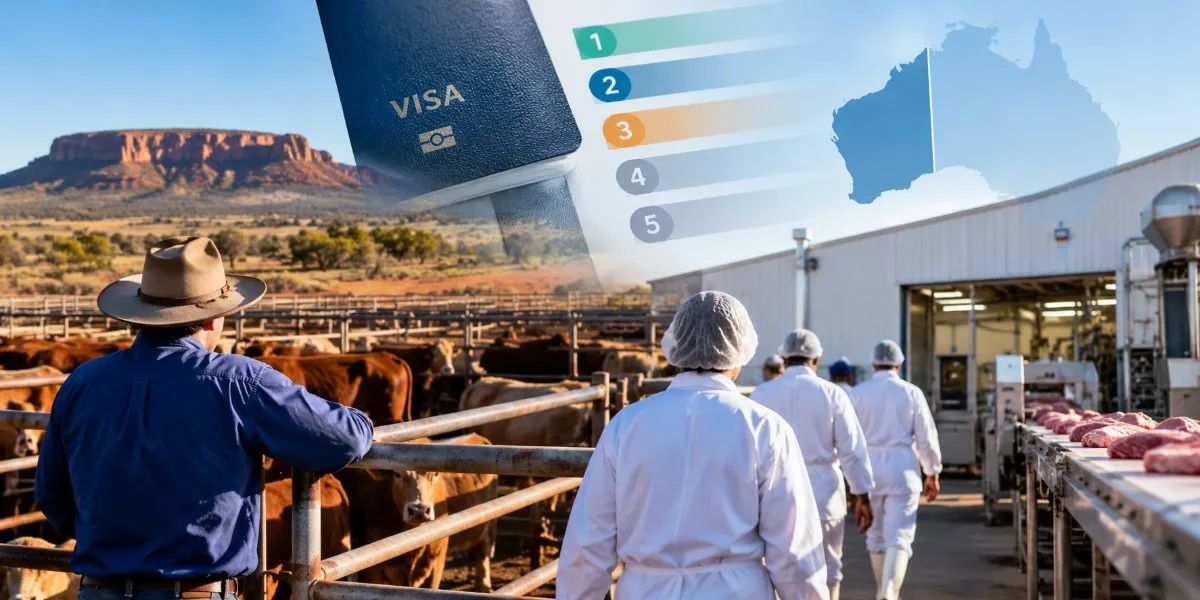
When news outlets reported on Australia's new order for processing skilled visas, most of the attention went to the big figures: the number of applications, the money involved, and the cattle left waiting. A quieter but important question has been overlooked. What happens when a rule meant to protect jobs for locals meets an industry that has never had enough local workers to begin with?
Western Australia's meat processing and pork sectors give us a clear example, because the figures leave little room for doubt.
Who goes first in the visa queue
In July, the Department of Home Affairs brought in a five-tier system to decide which visa applications get processed first. Offshore applicants working in industries other than law enforcement, defence, construction, healthcare and teaching were placed right at the end of the line. Meat processing was not included on the priority list, and pork production was left off too.
On paper, the choice can be defended. Keeping Australian jobs in the hands of Australian workers is a fair goal for any government. In practice, though, it hits hard in remote areas like the Kimberley. An abattoir near Broome advertised 60 skilled positions and got exactly one application from an Australian resident, and that applicant did not actually have the skills required.
This is not about employers wanting cheaper workers from overseas. It comes down to distance and the realities of the workforce. Far-flung regional operations cannot attract enough local applicants no matter what wages they offer, because very few skilled meatworkers are willing to move to far-north WA.
Real workers, real fees, real delays
The stakes are high for Yougawalla Pastoral Company. About 30 skilled workers from the Philippines, along with 13 partners, had been lined up to help reopen the site formerly known as the Kimberley Meat Company. Visa fees of around $390,000 have already been paid. The reopening was meant to happen this year, but it has now been pushed back to a soft launch in February and a full commercial opening in April. Meanwhile, thousands of cattle still need somewhere to go.
Further south near Narrogin, pork producer Dawson Bradford faces a similar struggle. Roughly 90 per cent of the workers at his piggery come from overseas. He is in the middle of growing his operation from 1,500 to 2,500 sows, with piglets due in six months. Many of his new workers were recruited from the Philippines back in January, and some have already left their previous jobs, yet nobody can say for sure whether their visas will be ready in time.
When timelines do not line up
Both stories point to the same gap. Three things are meant to move together: how long employers take to recruit, how long visas take to process, and business plans that wait for neither. Pigs keep breeding while a visa sits in a queue. Cattle cannot be held forever while an abattoir waits to open its doors.
Employers using the Meat Industry Labour Agreement stream have been told that applications are still being handled "in accordance with program requirements and established processing arrangements." The Department's position gives little real comfort when nobody can see how long things will take and, in Bradford's words, there is no one to call for an update.
What workers and employers can take from this
The experience of WA's meat and pork industries highlights a wider tension. Priority systems designed to protect the national job market do not automatically consider sectors and regions where local workers are simply not available. Options that could address it include carve-outs, faster labour agreement processing or clearer communication from the Department. Until the issue is tackled, other remote and regional employers may find themselves in the same spot: workers chosen, fees paid, and operations on hold while their applications sit at the back of the line.
If you have been offered a role in regional Australia, stay patient and keep in close touch with your employer about your visa progress. Keep your documents up to date, and think carefully before resigning from your current job until your visa is granted. Waiting is hard, but being prepared helps you move quickly once approval comes.
#skilled visa processing australia #meat industry labour agreement #regional worker shortage australia #australian skilled migration 2026 #visa priority hierarchy #home affairs ministerial direction #abattoir worker shortage wa #philippines skilled workers australia #pork industry labour shortage #meat processing visa delays #migration agent regional employers #offshore visa applicants australia #kimberley meat industry #agricultural migration policy australia #employer sponsored visa processing times
 From Executive to Senior Manager: Why Australia Cares More About Your Daily Work Than Your Job Title
 Nurses and Teachers Abroad: How Australia's New Visa Priority Tiers Could Affect Your Plans
 Filipino workers with admin and data skills: what Australia's AI shift means for your plans