Welders Wanted Down Under? What a New Industry Survey Could Mean for Overseas Tradies Like You
News · 2026-09-30 · 5 min read
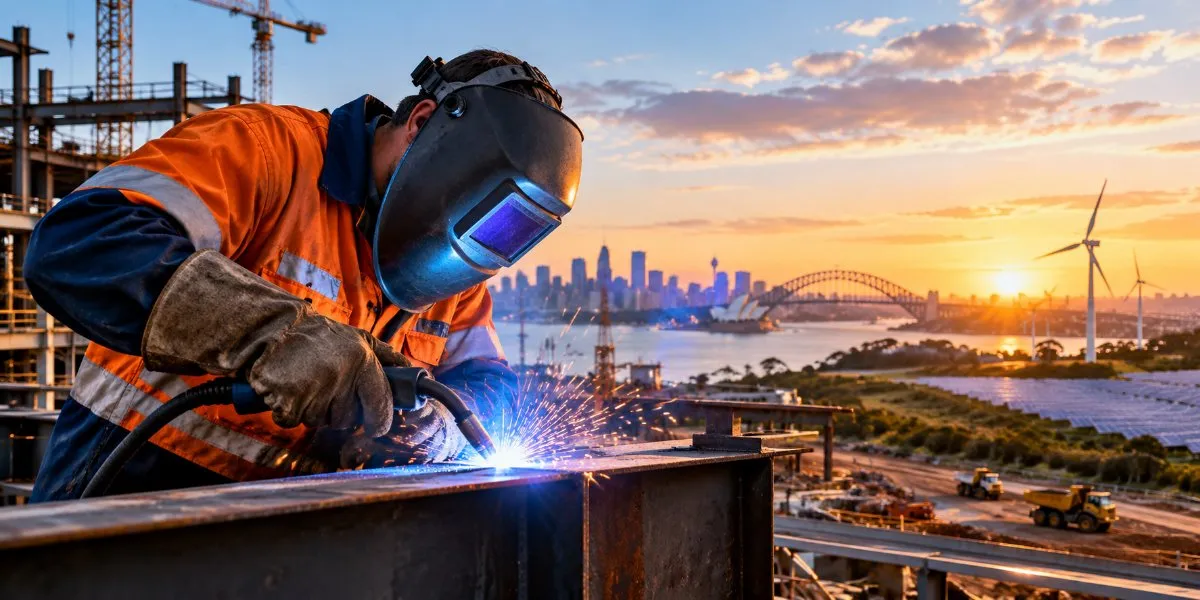
If you weld or fabricate steel for a living, whether you are working in the Middle East or back home in the Philippines, there is news from Australia worth reading slowly. The country has big plans for infrastructure, defence and renewable energy, and it may struggle to find enough skilled hands to carry them out. For welders and fabricators from overseas, that shortfall could turn into an opening.
First, the figures straight from the industry
The numbers come from Weld Australia's 2026 Industry and Workforce Outlook Survey. Its headline result is hard to ignore: 89.2 per cent of the businesses that took part believe Australia lacks enough qualified welders for the infrastructure and defence jobs coming up.
Here is the twist. Many of those same firms are anxious about landing their next contract. Six in ten told the survey they had three months or less of work locked in, and one in five had nothing confirmed at all. Almost 60 per cent of fabrication workshops were operating under 75 per cent capacity, and owners blamed two things together: too little work coming through the door, and too few skilled staff to take it on. So the real issue is a mismatch, not an absence of demand.
Weld Australia CEO Geoff Crittenden summed it up this way: local firms have plenty of capability, what they are missing is access to work. That is why the industry wants tougher local content rules whenever governments buy, so that more projects end up with fabricators based in Australia.
What welding businesses are asking government to do
Weld Australia wants federal and state governments to act on five fronts:
- Tighter local content requirements on public projects
- Independent checks on fabricated steel, no matter where it is made
- Support for the proposed Australian Fabrication Authority
- Help for small and medium-sized businesses to take up advanced manufacturing technology
- Contracts judged on whole-of-life value rather than whichever bid is lowest upfront
Quality is a real sore point. About 71.4 per cent of respondents said imported fabricated products fall short of Australian standards at least some of the time, and 53.6 per cent said this happens often or very often.
Money is tight, but good employers keep investing
Running a workshop has become more expensive. Some 82.1 per cent of businesses felt the bite of higher energy prices and 78.5 per cent were hit by dearer materials. Only 28.5 per cent passed those costs on through higher selling prices, and nearly 40 per cent watched their gross profit margins shrink.
Despite all that, half of respondents put more money into technology, 42.8 per cent spent more on training their people and 39.2 per cent increased research and development. For you as a worker, this is a helpful sign to look for: companies that invest in staff and equipment are usually the better ones to join.
Reading the survey as an overseas welder
If you are a qualified welder, boilermaker or fabricator, these are the lessons worth taking home:
- This is a long game. Defence, infrastructure and renewable energy work takes years to complete, and the survey points to qualified people as the bottleneck.
- Get to know the Australian standards. With so much focus on compliance, employers value workers who understand Australian welding and fabrication standards and can prove it. Keep your certifications and records of experience in order. Your OFW years count as genuine overseas work, so document them properly.
- Training may be part of your journey. The industry is calling for more apprenticeships, pre-apprenticeship programs, TAFE pathways and industry-led training. Migrants who already have solid skills may slot into this system, and some may find extra training useful for skills assessment or licensing.
- The trade is still earning the respect it deserves. About 79.5 per cent of respondents feel welding is not valued as highly as it should be. The sector is working to raise the profile of the trade, which could lift pay and conditions as time goes on.
Check the visa side before you pack your bags
A shortage in one industry is not the same as visa eligibility, and skilled visa rules and occupation lists change often. Look up the current Skills in Demand visa settings, the occupation lists and the skills assessment requirements for your trade on the Department of Home Affairs website, or get advice about your own situation from a migration agent who is registered.
Our takeaway for you, kabayan
Australia's fabrication sector has room to do more work, but not enough qualified people or confirmed projects to fill that room. If local content rules get stricter and more projects come through, demand for skilled tradespeople who work to standard could grow. If you are a welder or fabricator thinking about Australia, keep a close eye on this industry. In the meantime, start getting your certificates and work records ready, so you are prepared when the right opportunity appears.
#australia welder shortage #skilled migration australia #welding jobs australia #fabrication jobs australia #weld australia survey 2026 #australian manufacturing skills shortage #trades visa australia #skills in demand visa #migrate to australia as a welder #boilermaker jobs australia #local content rules australia #infrastructure jobs australia #defence industry jobs australia #overseas tradespeople australia #red migration
 Australia Still Needs Skilled Workers: What the Talent Gap Means for You
 Why Australia's Future Leans on Migrant Workers: A Friendly Guide to the Intergenerational Report
 Faster, Steadier Visas: What Australian Employers Are Asking For and Why It Matters to You