Paused, Not Gone: How the M5 Criminal Record Plan Affects Your Visa Journey
News · 2026-09-28 · 5 min read
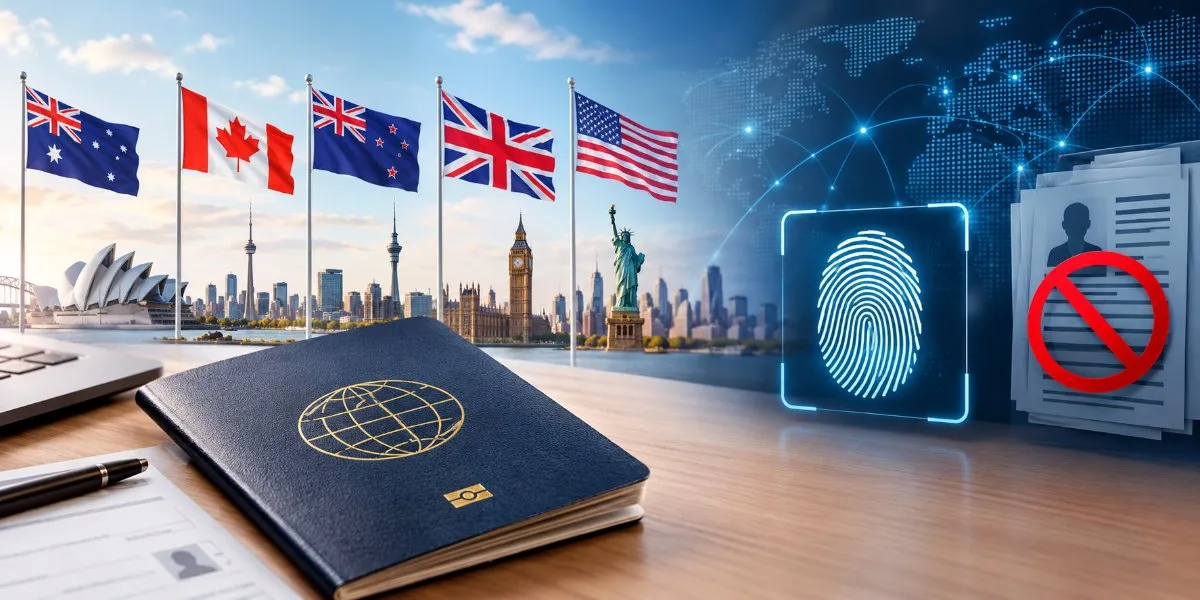
Big news for anyone dreaming of working or settling in one of the major English-speaking countries: the Migration 5 group has put on hold a plan that would have let members trade records of convictions held by their own citizens. Before you relax, though, it helps to know what is still being exchanged behind the scenes and how that touches your own visa application.
Who the Migration 5 are and what changed
The Migration 5 (M5) is the name for five partners: Australia, Canada, New Zealand, the United Kingdom and the United States. They had been looking into exchanging conviction data about people holding their own citizenship. In April 2026, their leaders agreed to pause that work. Whether you are applying from the Philippines or from a job in the Middle East, this is good to understand, but please do not read it as a sign that checks at the border are now easier.
The idea that was on the table
Going by RNZ's reporting, the current M5 set-up was designed to handle identity details for migration, and criminal history was never its focus. It does not send any conviction records across to New Zealand Police, and members do not use it to trade details about their own nationals.
Later discussions looked at something narrower: checking anonymised fingerprint data against the record systems of police or criminal justice bodies. New Zealand concluded that, under its law as it stands, overseas agencies have no basis to reach into conviction data held by its police or courts for immigration purposes. Immigration New Zealand's identity manager, Matt Gibbs, confirmed that while this was being explored, nothing was handed over, neither biometric data nor conviction records. The working group behind it last formally met at a virtual session in March 2025 and has not met that way since.
Why the plan could not move forward
In simple terms, it was the law, not a lack of interest, that blocked the proposal. Each country keeps its own rules on privacy and on criminal records, and nothing in them lets a partner's border agency automatically peek into another nation's justice system. If the idea ever comes back, lawmakers would need to act first.
The checks that are very much still running
"Shelved" does not mean nothing is being shared. The M5 partners still operate automated exchanges of identity and biometric information. New Zealand has had these deals in place with most partners since the early 2010s, the UK being the one exception. The partners signed off on a framework for quality control in May 2025, and the very first yearly reviews kicked off in early 2026. When New Zealand checked the 2025 calendar year, it found zero privacy breaches, no trouble with security of system access, and no partner received anything by accident or improperly.
A peek at the figures
Data made public through New Zealand's Official Information Act shows just how busy the system is:
- From Australia to New Zealand: over one million requests for traveller data over the year leading up to April 2026, which led to 676 fingerprint matches.
- From New Zealand to Canada, Australia and the UK: about 4,000 requests went to each country, giving 383, 340 and 283 positive matches, in that order.
- Canada and the US: the figures on their requests were redacted, and New Zealand held back its numbers for requests sent to the US, pointing to international relations.
Compared with the huge volume of requests, only a handful become matches. That shows it works as a wide screening net that picks out a small portion of cases, most likely people already noticed before by immigration authorities in another member country.
Practical tips for your application
- Keep your details consistent. Since identity information already moves between these countries, any mismatch in your name, birth date or travel record could show up somewhere. Double-check every form.
- Be honest about any criminal history when asked. Even with no direct swap of conviction data, most visa forms ask for police certificates plus a character declaration, and giving false information can get you refused or even banned.
- Keep your papers in order. Old visa applications, any refusals and your travel documents carry more weight now that identity data crosses borders, so keep copies handy.
- Remember the pause may not last. If the legal frameworks change, governments are free to come back to the idea.
- Get proper help if your history is complicated. Had a conviction or a refusal in the past? Talk first with an immigration lawyer or a registered migration agent before you lodge anything.
Kapit lang: what to take away
Sharing citizens' criminal convictions is off the table for now, but the M5 system for exchanging identity and biometric data is still running and gets plenty of use. For every worker preparing to go abroad, being truthful and consistent in every application is still your safest path.
#migration 5 #m5 countries #five country conference #criminal conviction data sharing #immigration data sharing #biometric data exchange #fingerprint matching immigration #visa application background checks #police clearance certificate #new zealand immigration news #australia visa checks #character requirements visa #immigration privacy law #border security cooperation #migration news 2026
 Approved Without Anyone Looking: Simple Lessons From New Zealand's ADEPT Visa Glitches
 New Zealand's July Migration Boost Came Mostly from Students: A Simple Breakdown
 Filipino workers with admin and data skills: what Australia's AI shift means for your plans