New Zealand Has the AI Tools. What It Really Needs Is Skilled People
News · 2026-09-16 · 5 min read
If you are dreaming of a technical or specialist career overseas, here is a story worth reading slowly. Businesses across New Zealand already own plenty of AI tools. What many of them are missing is a proper plan for the workers expected to use, manage and fix those tools every day. That is the uncomfortable message inside Deloitte's newly released Tech Trends 2026 report on New Zealand, and it matters whether you are working in the Middle East, back home in the Philippines or somewhere else entirely.
One Figure Tells the Whole Story
According to the report, 93% of the money New Zealand organisations spend on AI is going into technology, and just 7% is going into people and skills.
Keep in mind that New Zealand is already coping with an ageing workforce and labour shortages that keep showing up in its regions. Read against that background, the split looks like more than a small imbalance. It suggests employers are purchasing capability much faster than they are growing the people who can use it.
Why Adding a Chatbot Is Not Enough
Deloitte's Matt Dalton did not sugar-coat it. In his view, the time for experimenting with AI has ended, and the edge now goes to organisations prepared to change how work is actually organised, instead of attaching a chatbot to a process that stays the same.
The report has a name for that second approach: “shallow adoption.” Placing a copilot inside an old workflow does not make a team more capable. People simply get one more tool while their job description stays exactly as it was. And this seems to be happening everywhere. Worldwide, only around one in eight organisations has taken agentic AI past the testing stage and into actual production. Most of the others are running trials that keep everyone busy without delivering real value.
For HR leaders, workforce planners and mobility teams, this difference is huge. On this reading, the employers who move ahead in 2026 will not be the ones holding the most software licences. They will be the ones rethinking roles, retraining staff for higher-value work, and finding the specialised skills needed to run teams where people and automation work side by side.
Where Workers Fit in a “Human and Silicon” Future
Deloitte describes 2026 as the year of the “hybrid human and silicon workforce.” In plain terms, AI systems and robotics are taking on more of the routine, repetitive or dangerous tasks. That pushes people towards roles that call for judgment, creativity and deeper technical know-how. For some workers the shift feels freeing; for others it is a push they did not choose.
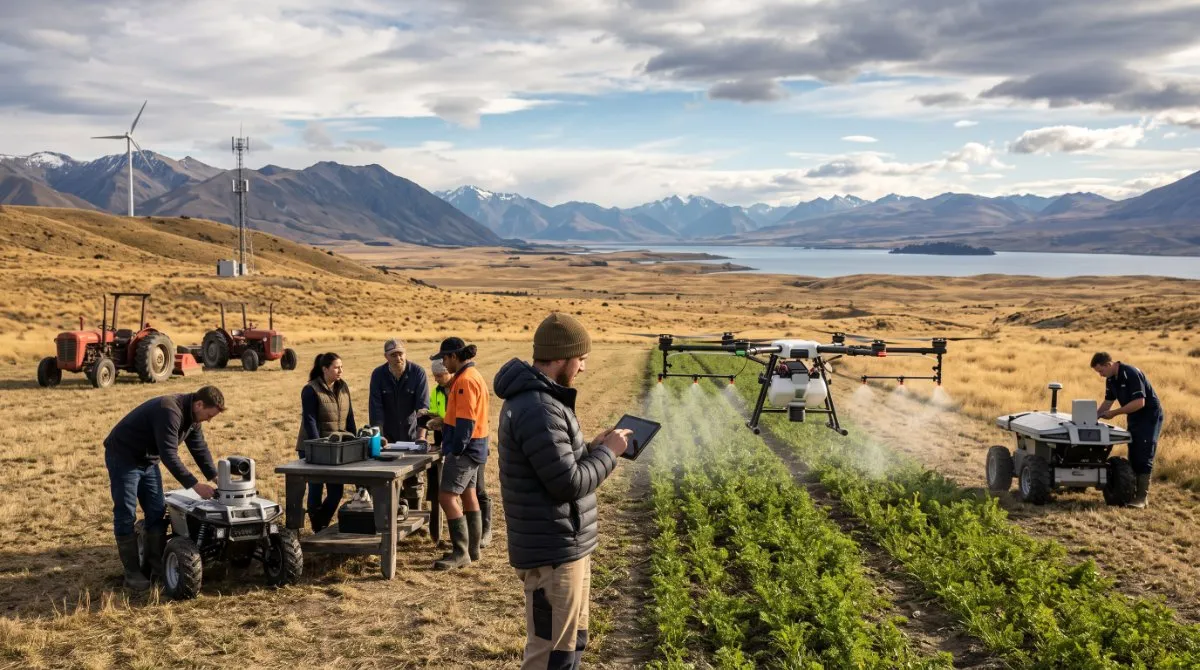
There is a direct link here to recruitment and migration. Automation is spreading into agriculture, utilities, infrastructure inspection and transport, sectors where New Zealand's geography and spread-out population already make staffing a struggle. The point is not that employers will need fewer people, but that they will need different ones. In particular, businesses will be looking for:
- Hands-on operators able to run and look after autonomous systems, not only office staff who use AI on a computer
- Specialists for regional and infrastructure-heavy industries, where physical AI such as drones, autonomous inspection and remote robotics is growing quickest
- Local workers upskilled into higher-value positions, supported by targeted international recruitment wherever local gaps cannot be filled quickly enough
Dalton also spoke about young people building “capabilities.” That is more than a feel-good line. It points to the skills pipeline, rather than the software licence, as the thing that decides which companies truly gain from AI.
Security Threats Make Capable Teams Even More Important
The report also warns that AI is making cyberattacks quicker and cleverer. Automated tools now help bad actors run phishing campaigns and hunt for weak spots faster than human security teams can react. As aviation, healthcare, transport and other physical infrastructure lean more heavily on digital systems, the dangers of short-staffed teams and poorly trained operators grow with them.
It all comes back to one idea: technology without capable people behind it can turn into a liability rather than an advantage.
What This Means for Your Own Career Plans
Deloitte's view reads less like a forecast about gadgets and more like an economic warning. In a small, resource-limited market such as New Zealand, getting the balance between workforce and AI wrong is not a minor slip; the damage builds on itself. Getting it right can be a real advantage, partly because so few competitors are doing the harder work of redesigning roles and rebuilding skills pipelines instead of simply buying software.
So remember that 93/7 split. The tools are already being bought. The people who can run them well are the ones in short supply.
For workers from the Philippines and everywhere else, the practical takeaway is encouraging: hands-on technical skills, specialist experience and a willingness to keep learning are exactly the strengths this report describes as scarce. Keep building them, and keep your training records and work history neat and ready.
#new zealand ai trends 2026 #ai workforce strategy nz #hybrid human and silicon workforce #ai skills gap new zealand #physical ai adoption #agentic ai production #ai talent shortage nz #deloitte tech trends 2026 #ai recruitment new zealand #workforce redesign ai #upskilling for ai jobs #ai cybersecurity risk nz #automation and jobs new zealand #technical talent recruitment ai #future of work new zealand
 AI Is Changing How New Zealand Hires: Good News for Experienced Workers Planning a Move?
 Filipino workers with admin and data skills: what Australia's AI shift means for your plans
 Opposition graduate visa proposal: a calm guide for Filipino students in Australia