$200 Billion of Work and Not Enough Hands: Why New Zealand Is Looking for Skilled Workers Like You
News · 2026-08-20 · 4 min read
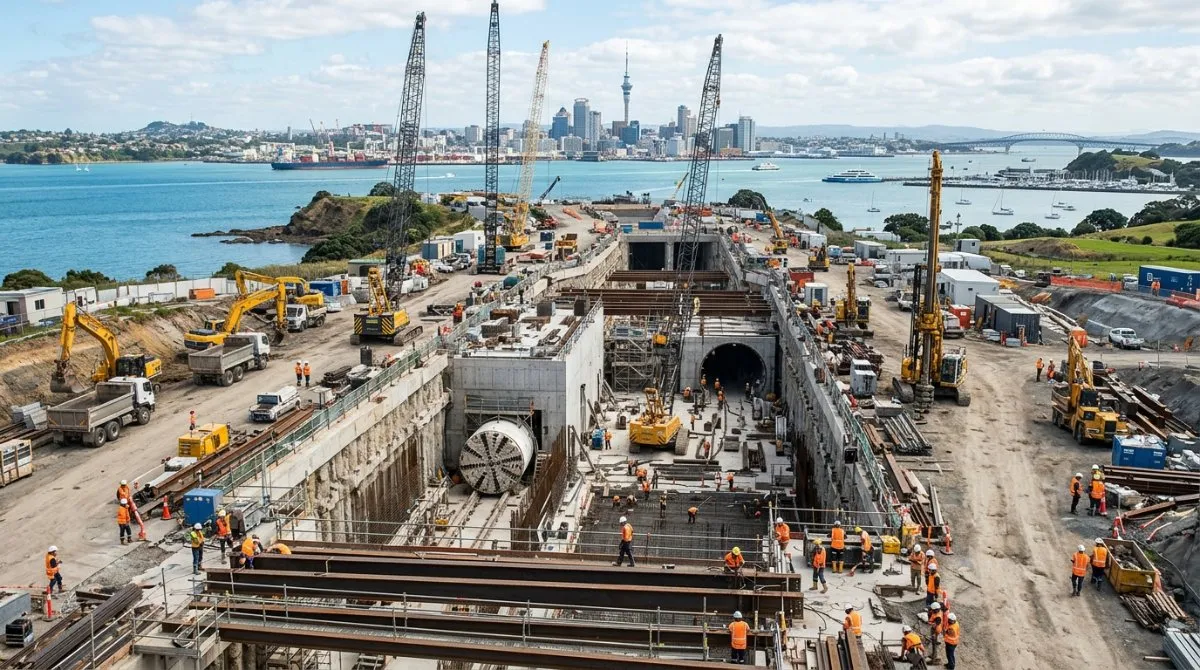
Are you an engineer, a project manager or a skilled tradesperson thinking about where to take your career next? Whether you are currently working in the Middle East or back home in the Philippines, New Zealand deserves a closer look. The country has more infrastructure work lined up than it has people to do it, and the government is under real pressure to close that gap quickly. That puts skilled workers in a stronger position than usual.
A Huge Pipeline With a Staffing Problem
Close to $200 billion in committed and planned projects is waiting in New Zealand's infrastructure sector. Think roads, rail, water systems and energy upgrades. It sounds like a building boom, and on paper it is. But industry leaders openly say there are simply not enough qualified people to deliver all of it, and more government money cannot change that.
Tracey Ryan, head of Aurecon New Zealand and chair of Infrastructure New Zealand, has been urging the industry to see infrastructure as a real engine of growth rather than just a long list of construction jobs. That change in mindset is a big reason why skilled migrants are so important at the moment. What the country needs is capability, not only capital.
Where Have the Local Workers Gone?
A few figures show why there is room for people from overseas:
- In the year to March 2025, construction employment dropped by 3.5%. This extended a two-year decline that has taken around 16,000 jobs out of the sector.
- On a net basis, roughly 46,400 New Zealand citizens moved away in the year to September 2025. Most of them crossed the Tasman to Australia, looking for better pay and more stable work.
- About one in three engineers working in New Zealand today trained overseas, so the system already depends heavily on migration.
- Every year the sector needs around 2,300 new engineers, and it is falling well short. Engineering degrees are a smaller share of graduates than the OECD average, and a third of new engineering graduates leave the profession within two years.
Nick Leggett, chief executive of Infrastructure New Zealand, has spoken frankly about the cycle: when projects are cut, skilled workers either quit the industry altogether or move to countries with a steadier flow of work.
The Tunnel Workers Who Did Not Stay
People in the industry often point to the Auckland City Rail Link as a warning. When the tunnelling finished, more than 100 tunnel boring machine operators left New Zealand. Should the country need that know-how again for a future Waitematā Harbour crossing, it will have to build up that group of workers almost from the beginning. It is a costly reminder that steady, continuous work, and not just plenty of work, is what convinces skilled people to stay.
Engineering New Zealand's Dr Richard Templer said something similar in early 2025. The profession needs certainty as well as projects: a pipeline that lasts beyond election cycles, so that professionals can really plan their careers.
The Need Keeps Growing
This is not a short-lived gap. According to MBIE's national construction forecasts, infrastructure activity is set to rise from $16.9 billion in 2024 to $19.6 billion by 2030, and total construction spending hit $55.7 billion in 2025 alone. Transport gives a sense of the size of the shortage. Officials estimated that the sector would need about 65,000 workers by 2026/27, compared with 40,000 only a few years before, and they themselves noted that this growth was faster than the local workforce could realistically supply.
What It Could Mean for Your Plans
For skilled people in engineering, construction management and specialist trades, the mix of a long-running shortage, growing demand and a government keen to keep its project pipeline believable is the kind of setting where visa pathways, employer interest in sponsorship and pay levels tend to get better. Employers are not only advertising jobs; they are competing for a smaller pool of qualified people, and that competition helps migrant candidates.
The shortage will not fix itself. Until New Zealand creates a pipeline steady enough to keep its own workers from leaving, the opportunity remains open for skilled professionals who are ready to take it.
A Friendly Reminder Before You Apply
Your OFW experience counts as real overseas work, so highlight it well in your CV. Take your time, check every job offer and visa requirement through official sources, and choose an employer you can trust. Laban lang!
#skilled migration new zealand #new zealand engineer shortage #migrate to new zealand #new zealand work visa engineers #infrastructure jobs new zealand #new zealand skilled worker visa #construction jobs new zealand migrants #engineering jobs new zealand 2026 #new zealand labour shortage #move to new zealand for work #new zealand infrastructure pipeline #skilled migrant visa pathway #new zealand vs australia jobs #project management jobs new zealand #new zealand immigration engineers
 AI Is Changing How New Zealand Hires: Good News for Experienced Workers Planning a Move?
 New Zealand Needs More Tech People: What IT Workers Abroad Should Know
 New Zealand Engineering: Why Firms Stopped Training Graduates, and What It Means for Engineers Abroad